
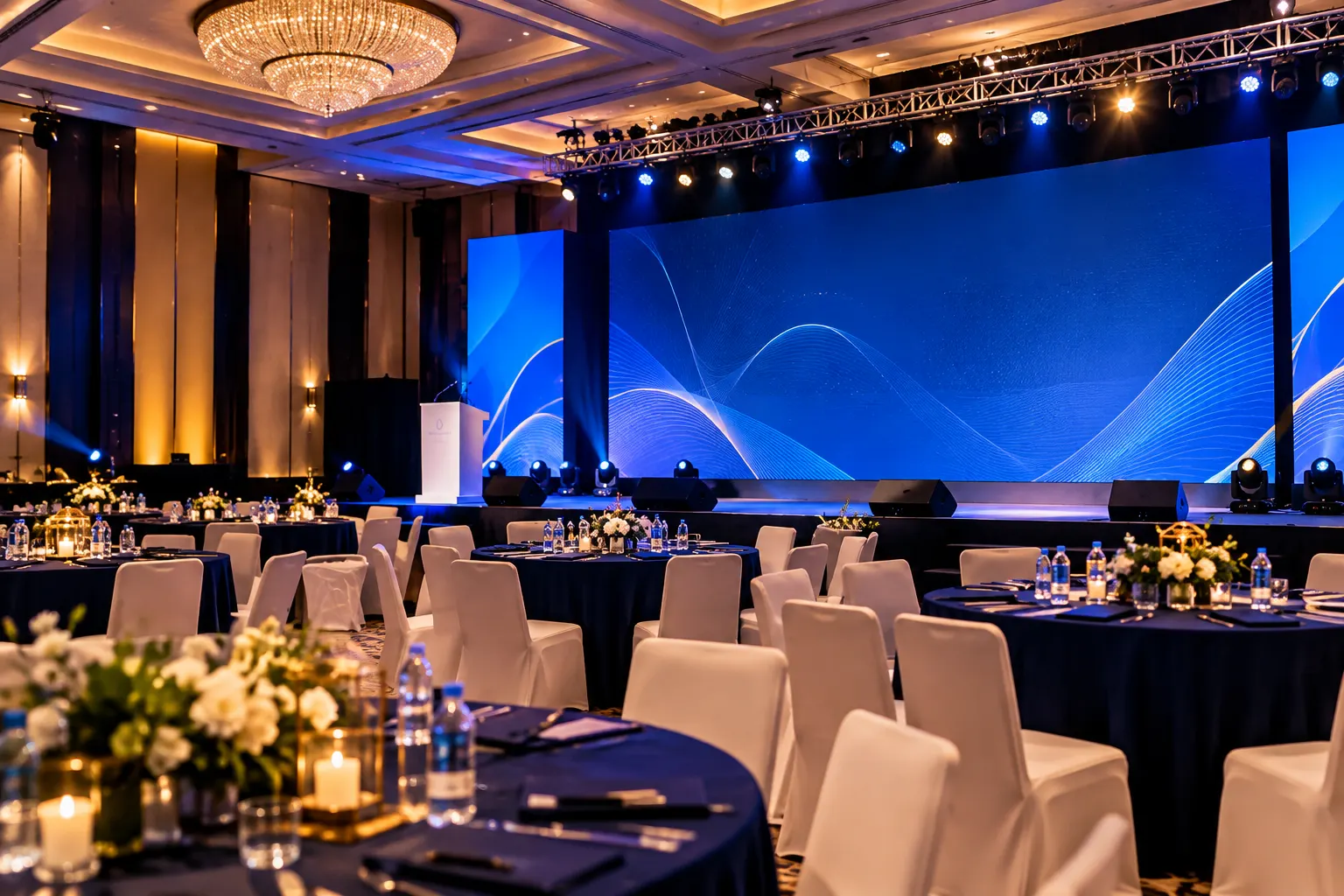
A corporate event rarely fails because of one big mistake. It usually slips through small gaps. The microphone plan does not suit the hall, the registration desk has one queue for 300 people, or the caterer was given an old headcount. Choosing between corporate event management companies in Pune is mostly about finding a team that catches those gaps before the day.
This guide is for business owners, HR heads, marketing managers and admin teams who need a partner for a conference, product launch, annual meeting, award night or employee event. It covers what to check, what to ask and where plans usually break.
What corporate event management covers
It is the planning and running of a business event from the first brief to the final handover. That includes the concept, run of show, venue, vendors, guest handling, on-site supervision and a closing review.
The scope changes with the event. A conference needs speaker coordination, seating layouts and a technical rehearsal. A product launch depends on staging, lighting and a well-timed reveal. An employee engagement event leans on activities and food flow. An award night needs a tight script, because every delay is felt by the whole room. Ask each company how it would handle your kind of event, not events in general.
Start with the objective, not the venue
What should people know, do or feel after this event? A sales conference may need attendees to leave with clear targets. A launch may need press coverage and dealer enquiries. A team celebration may simply need colleagues from different branches to meet.
Once the objective is clear, the guest list, format, session length, seating style and budget split follow from it. A planner who asks about your objective in the first conversation is thinking about outcomes. One who goes straight to themes and packages is probably selling a template. Share who is attending, how long they can stay and what leadership expects to see.
Checking experience and relevance
Experience counts only when it is relevant. A team that has handled many weddings has not necessarily run a 400-seat conference with a live stream. Ask for examples close to your event in size, format and setting, and ask what the team itself handled.
Photographs show what looked good. They do not show how check-in worked, whether sessions ran on time or how a last-minute change was handled. Ask to speak with a past corporate client, and ask which members of the planning team will actually be present on your event day.
Venue and logistics
Check capacity in the layout you need, since a hall that seats 300 in rows may hold far fewer with tables. Confirm stage size, power load, backup power, loading access, parking and lift access for equipment.
Timing matters in Pune. Ask how the planner schedules setup, guest arrival and departure around peak traffic hours, and whether the venue restricts sound levels, outside vendors or décor materials. Venue approval should include a site visit with the planner, not only a brochure.
Vendor coordination
Most corporate events run on several vendors at once: catering, sound and lighting, staging, printing and photography. The common failure is not a bad vendor but poor coordination between good ones. The caterer arrives while the stage is still being built, or the AV team finds the power point hidden behind a backdrop.
Look for a single coordinator, a shared timeline and written vendor briefs. Ask which services the company delivers itself and which are subcontracted. Dream Creations Event, for example, lists catering and photography and videography alongside event planning, which can reduce the number of parties you manage. Whichever company you choose, ask who is accountable if a vendor fails.
Budget and quotation transparency
Ask for an itemised quotation that separates venue, décor and staging, AV, catering, manpower, permissions, transport, contingency and the planner’s fee. Lump-sum lines make comparison impossible.
Check what is excluded. Power backup, taxes, overtime for late finishes, extra headcount and damage deposits are common gaps. Ask how changes are priced if the guest count or schedule moves, and how payments are staged.
Guests, registration and event day
Walk through the guest journey from invitation to exit. How will people confirm attendance? How many check-in desks are needed? Where do speakers, VIPs and vendors enter? Who holds the final guest list on the day?
A written run of show is the working document on event day. It lists every cue with a time and a responsible person, so ask to see a sample. Also ask how the team communicates on site and who decides when something changes.
Contingency and post-event follow-up
Ask for a specific answer for each realistic risk: power failure, a late speaker, a vendor no-show, a change in guest numbers or rain at an outdoor setup. A general assurance is not a plan.
After the event, a good partner closes the loop with a cost reconciliation, vendor settlement, photographs and a short review of what worked. For recurring annual meets, that review makes the next edition easier.
Questions to ask before you hire
- Which corporate events of my size and format have you handled?
- Who will be my single point of contact, and who will be on site?
- Which services do you deliver yourselves, and which are subcontracted?
- Can I see an itemised quotation, including exclusions?
- What is your backup plan for power, AV and vendor issues?
- How do you handle changes to the guest count or schedule?
Making the final choice
Compare corporate event management companies in Pune on how they think, not only how they present. Relevant examples, specific questions about your objective, clear costs and a named team for the event day are the strongest signals. If you are building a shortlist, you can review the corporate event services from Dream Creations Event, browse its published work and share your brief to see how its planning process compares with the others you speak to.
Frequently Asked Questions
How early should I start planning a corporate event?
For large events such as conferences, product launches and award nights, allow two to three months so that venue, vendors and approvals are not rushed. Smaller internal events can often be planned in a few weeks, but earlier booking gives you more venue and vendor choice.
How do corporate event management companies in Pune usually charge?
Most use a fixed fee for a defined scope, a percentage of the total event cost, or an itemised quotation where each vendor cost and the planning fee are shown separately. Itemised quotations make it easier to compare companies and to see what changes if the scope changes.
Should I hire one company for everything or manage vendors separately?
A single partner reduces coordination work and gives you one point of accountability. Managing vendors yourself can give more control over individual choices but needs more of your team’s time. The right choice depends on event size and the time your team can spare.
How can I tell whether a planner can handle my event size?
Ask for examples of events with a similar guest count and format, and ask what the team itself managed. Speaking to a past corporate client and visiting a venue with the planner will tell you more than a presentation will.
Who is responsible if a vendor fails on the day?
This should be settled in writing before you sign. Ask whether the planner is accountable for vendors it appoints, what backup options exist and how replacement costs are handled.